Blog Article

Davidson Difference: Global Sales Office Creating Value in All They Do

Aug 10, 2026

In 2022, Davidson Hospitality Group formally announced the launch of our world-class Global Sales Organization, made up of industry experts with experience in branded, independent, lifestyle, and convention hotels. These subject matter experts have since collectively generated $163 million in group and transient revenues, engaging with opportunities across 100% of the Davidson portfolio!

Davidson Hospitality Group reached out to our Global Sales specialists for their thoughts on where the industry stands today, what they’re seeing, and some best practices that are returning value to our hotel teams, our owners, and most importantly, the customers that trust Davidson with their accommodation needs.

Here’s what they had to report:

 A few thoughts on 2026 hotel trends shaping transient / negotiated segments

There’s been much conversation around economic volatility – that discussion will continue, but overall, 2026 is proving to be a fascinating year for both hotels and travelers, as well as travel buyers / Advisors.

In case you haven’t heard the buzz, all travelers (business, leisure, and group) have become more selective about where they stay, and hotels are adapting their offerings to meet changing expectations. There’s still a customer for every hotel. As I recall from my W / Starwood days, brand identity and local immersion remain key – but now hotels must combine these requirements with even more complex electronic distribution, revenue management, and equally as important, content delivery – which tells the story!

1. Personalization Has Moved Beyond Loyalty Programs – let’s not kid ourselves though; the major brands and credit card programs are doubling down on the points game. Points and brands still matter!

Travelers today expect hotels to know their preferences before they even arrive. Thanks to advances in AI and guest data platforms, hotels are delivering more tailored experiences, from room preferences and dining recommendations to personalized offers and upgrades. The goal is simple: make every stay feel unique and relevant to the individual guest. This is not an easy feat, even with AI and the massive amounts of data available to our Operations teams.

2. Bleisure Travel Is Still Growing – Whether you embrace the term or cringe at it, extending business trips has always existed. The expansion of remote work obviously helps further blur the line between Business and Leisure.

Hotels that offer flexible workspaces, strong Wi-Fi, wellness amenities, and local experiences are benefiting from this trend. What started as a post-pandemic shift has become a permanent part of travel behavior. It remains to be seen if there is continued growth in this space. Unknown variables to watch:

  • Millennials and Gen Z who put off having families, as well as Gen Xer-empty nesters – all currently in the workforce without small kids/school schedules to accommodate.
  • The increase in multi-generational travel for the above-noted reasons – and longer
  • An obvious increase in purpose-driven travel, whether this is to reflect a more purposeful/productive business trip by itself or a more deliberate extension of business trips for better work/life balance.
  • Last but certainly not least, the embrace of “hushpitality.” I know…another term!

While this is an extension of the above-mentioned purpose-driven travel, it’s heavily focused on the escape to quiet and balanced spaces for deep rest or personal privacy. Obviously a sign of overstimulation! (from social media?)

3. Travelers Are Still Looking for Authentic Local Experiences BUT have we considered how these affect the point of sale?

Obviously, today’s guests want more than four walls and a bed. They want to connect with the destination, its people, and local culture.

  • As a byproduct of social media and the demand for local knowledge, Travel Advisors are becoming experts in social media and video content – further influencing the purchase through content and personal opinions.
  • Very interestingly, Influencers can now white-label their own travel booking portals and drive income from commissionable bookings. *Reach out to learn more about this and which channel these bookings are coming through! (Hint: Third parties.)
  • Which demographic do you think this impacts? (Hint: Everyone.)


Ben Johnson
Senior Director, Global Sales – Leisure, Business Travel, and Airlines

MICE: More Choice. Less Chasing. Smarter Sourcing.

There is no shortage of hotel options in 2026. More brands. More brands within brands. More technology—and now AI—promising to make sourcing easier. Yet getting to the right hotel can feel harder than ever. More choice does not always create clarity. Sometimes, it just creates noise. Planners are balancing budgets, expectations, destinations, and property needs. Success may be measured differently for every program, but the setting still has to support the event’s purpose.
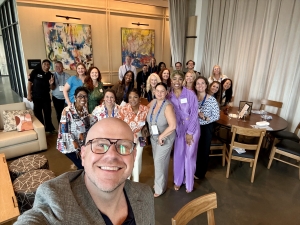
1. Curation Is Replacing Option Overload

According to Cvent’s 2026 sourcing research, 63% of planners cite attendee engagement as their primary KPI. That screams one thing: a hotel is not just a hotel. The experience, flow, personality, location, and fit matter too. Planners cannot visit every hotel or fully understand properties that look nearly identical online. Sometimes, they need a trusted gut check: “We do not have the right fit for this one.” Or. “What about this?”

A valued client brought me several programs while trying to win over a new customer. After one brainstorm, we found strong options across different Davidson properties and hotel types. We also discussed contracting without forcing the client into one brand or a multi-year commitment before testing the waters. A few programs did not fit our portfolio, so I suggested possibilities elsewhere.

That may not sound like selling, but it is exactly how long-term selling should work. Brain trust. Earned trust. Real answers. No forcing a square program into the wrong ballroom.

2. Responsiveness Is Also About Being Useful

Cvent reports that 63% of planners sourcing programs for up to 50 attendees expect a venue response within four business days. Honestly? That still feels about two days late. Speed matters, but a fast response is not automatically useful. Are the first three names on a spreadsheet really the best choices? Likely not.

Limited information comes in. A hotel sends an approved group “rack rate.” Questions start. More people are copied. Everyone waits, or someone gets ghosted.

Email is a time trap. Email is a time trap. Email is a time trap. I recently counted 29 emails around questions that could have been answered in a three-minute call. Call first. Send one recap afterward. Done. Sometimes, the most efficient technology is still a conversation.

This is where one portfolio contact matters. I am included on Davidson Cvent opportunities tied to my clients, work alongside brand GSOs and CVBs, offer candid RFP guidance, and become the planner’s Davidson phone tree for answers and action. I can reach property sellers or leadership without asking the customer to navigate our organization. I can support meetings and site visits when the hotel cannot be there. I do not let the process die in a voicemail.

A hotel is not easy to choose simply because it appears in Cvent. It becomes easier when someone owns the process. One quick call confirmed the space fit, got both sides honest about budget, and uncovered where each had flexibility. The client needed a few viable choices—not 100 hotels, 94% of which would never work. And yes, our hotel was selected. We were fast, humble, hungry, and—most importantly—a phenomenal fit.
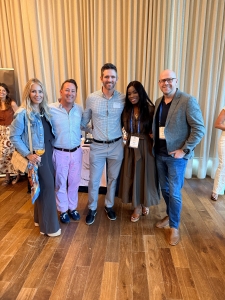
3. Rates Are Rising. Proving Value Should Be Easier.

Everyone knows rates and costs are up. What matters now is showing the complete value equation. Published rate versus group rate. Food and beverage discounts. Reduced fees. Upgrades. Concessions. Each can have a real number attached. Value does not always need more adjectives. Sometimes, it just needs arithmetic.

A property salesperson and I worked on a corporate program with a tight—and shared—budget. Rather than declaring it impossible, we moved value from one bucket to another based on the client’s flexibility. The buyer got what mattered. The hotel protected what mattered. Leadership on both sides was happy. A true win-win-win.

Technology can find hotels and distribute an RFP. A trusted Global Sales partner helps identify the right fit, engage the right people, remove roadblocks, and stay accountable through the decision. Davidson’s advantage is not simply the breadth of our portfolio. It is making that portfolio easier to understand, easier to access, and easier to partner with.

None of this is especially novel—and maybe that is the point. The same challenges keep escalating, while the answers may be the basics we have somehow made more complicated: pick up the phone, ask better questions, give honest answers, show the math, and own the process. Sometimes moving forward means getting back to what was simpler—and what already worked. One relationship. Every brand. Every independent. One portfolio working together.

Brad Minton
Senior Director, Global Sales – Group

One Customer, Many Opportunities: A Portfolio-Wide Sales Philosophy

Great hotel sales is about more than filling rooms. It’s about building lasting partnerships and creating value. Over the years, I have found that my approach comes down to three simple principles: put relationships first, think like the customer, and look beyond a single property to drive revenue across the entire portfolio. Together, these ideas have shaped how I build trust, solve problems, and deliver results for both clients and hotel teams.

1. Relationships First: My Approach to Hotel Sales
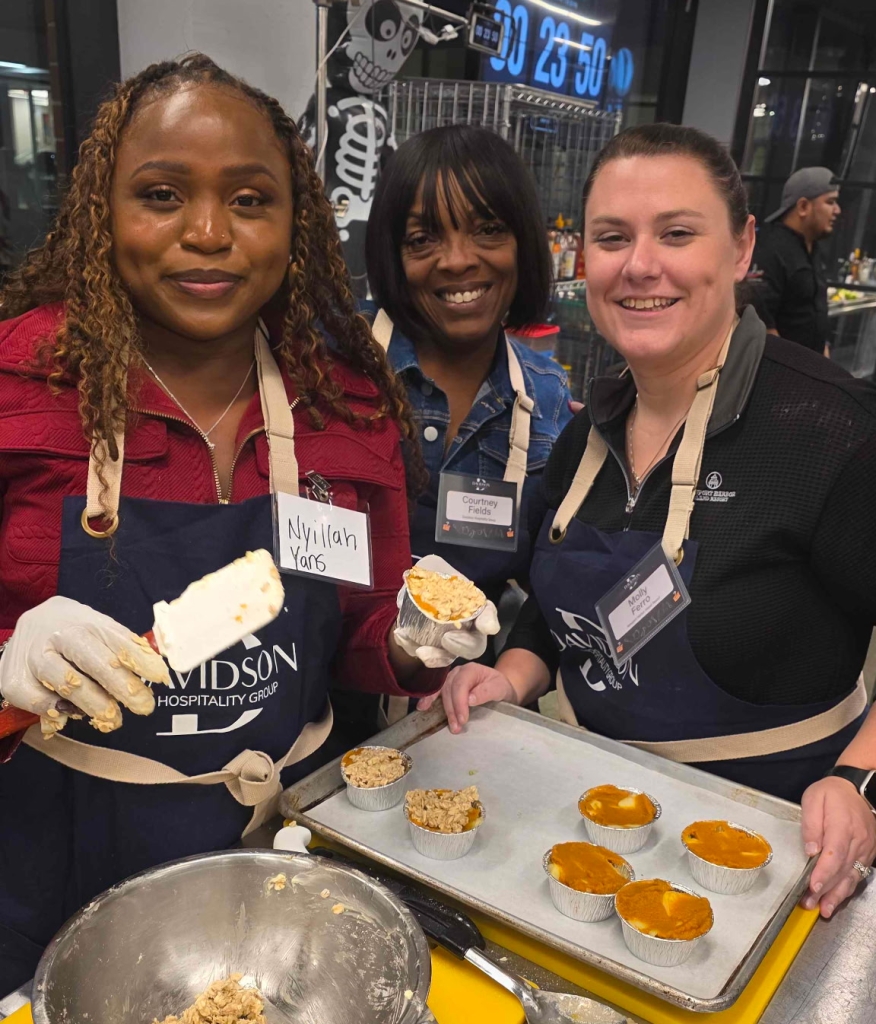
In today’s economy, relationships are one of the biggest differentiators in hospitality. Travel buyers have more choices than ever and can compare prices in seconds, so what keeps them coming back isn’t just the room. It’s how we make them feel. Building trust and delivering personalized service creates loyalty that goes beyond price.

For me, relationships are at the center of everything I do. Strong client relationships lead to repeat business, referrals, and long-term partnerships. Internally, collaborating with colleagues across our hotels helps us identify opportunities and deliver better solutions for our customers. Those connections make us stronger as an organization.

At the end of the day, people do business with people they trust. When we invest in relationships with our guests, our clients, our teams, and our communities. We are not just driving revenue today; we are creating sustainable business for the future.

2. Thinking Like the Customer

As a Global Sales Director, I’ve learned that understanding our customers’ goals is just as important as understanding our hotels. Every client is trying to achieve something whether it’s hosting a successful meeting, managing travel budgets, creating memorable experiences, or supporting their own business objectives. When we start by understanding those priorities, we shift from simply selling rooms or meeting space to becoming trusted partners who create meaningful solutions.

This mindset extends beyond the sales team. Every department within hotel plays a role in delivering on the promises we make. When we all view decisions through the customer’s perspective, we create experiences that build trust, strengthen relationships, and inspire long-term loyalty.

3. Driving Revenue Across the Portfolio: It’s Bigger Than One Hotel

One of the biggest shifts in my global sales journey has been learning to move beyond thinking about “one hotel” and start thinking about our portfolio.
The question is no longer just, “How can we win this piece of business?” It becomes, “What is the best solution for our client?”
Sometimes that opportunity is at a single property.  Sometimes it’s another property, another market, or another brand within our portfolio. What matters most is that we are creating value for the customer and strengthening the relationship.

For our clients, having a trusted partner who understands their business and can connect them with the right solutions creates confidence and loyalty. For our hotels and teams, a portfolio mindset opens doors to new opportunities, referrals, and long-term growth. True collaboration means we don’t compete for business within our own organization. We work together to create more of it.

In today’s hospitality landscape, relationships are our greatest advantage. When we focus on serving the customer first, the revenue follows. Think bigger. Collaborate more. Create lasting value.

Courtney Fields
Senior Director, Global Sales – Group